March 21, 2021
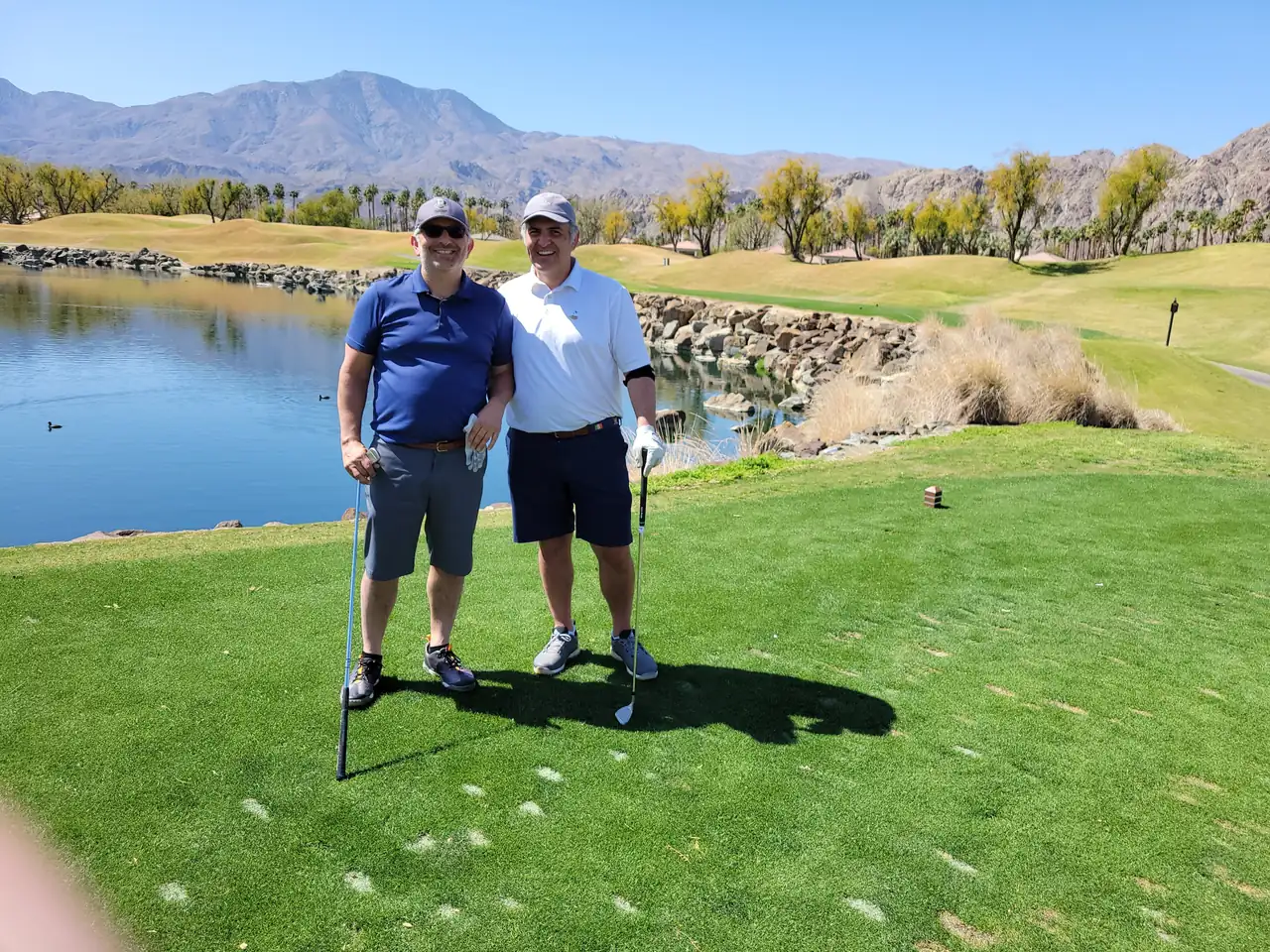
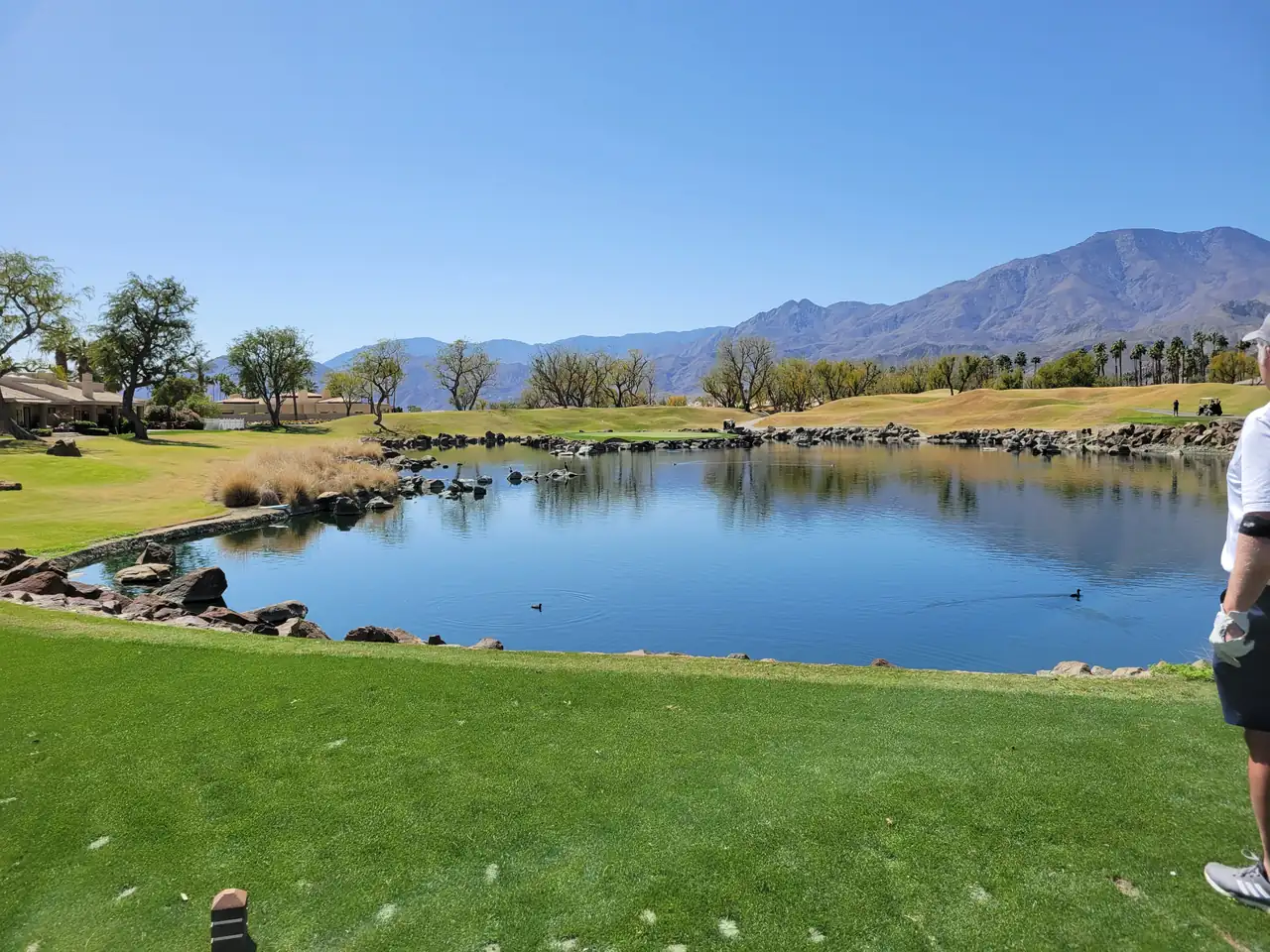
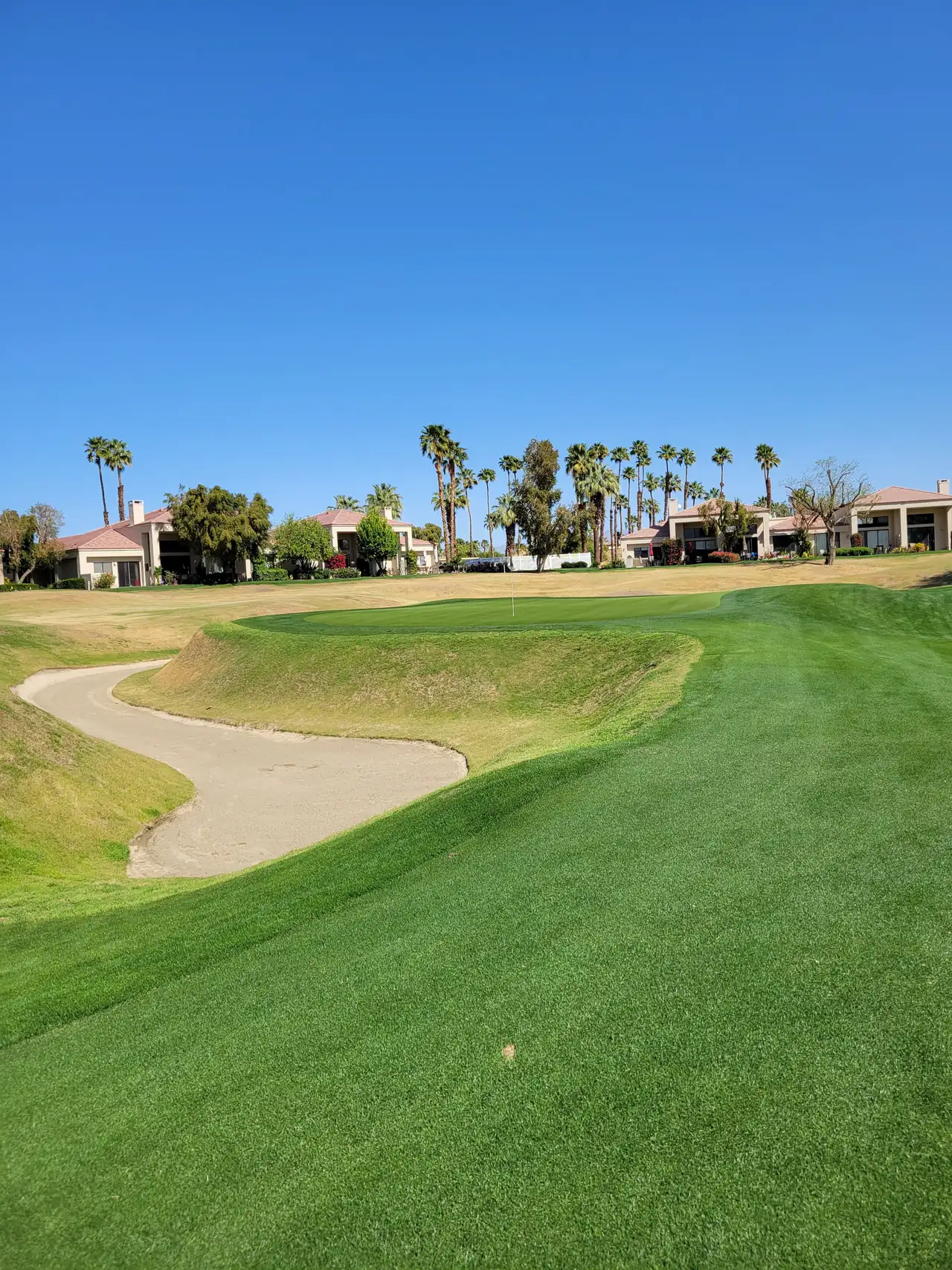
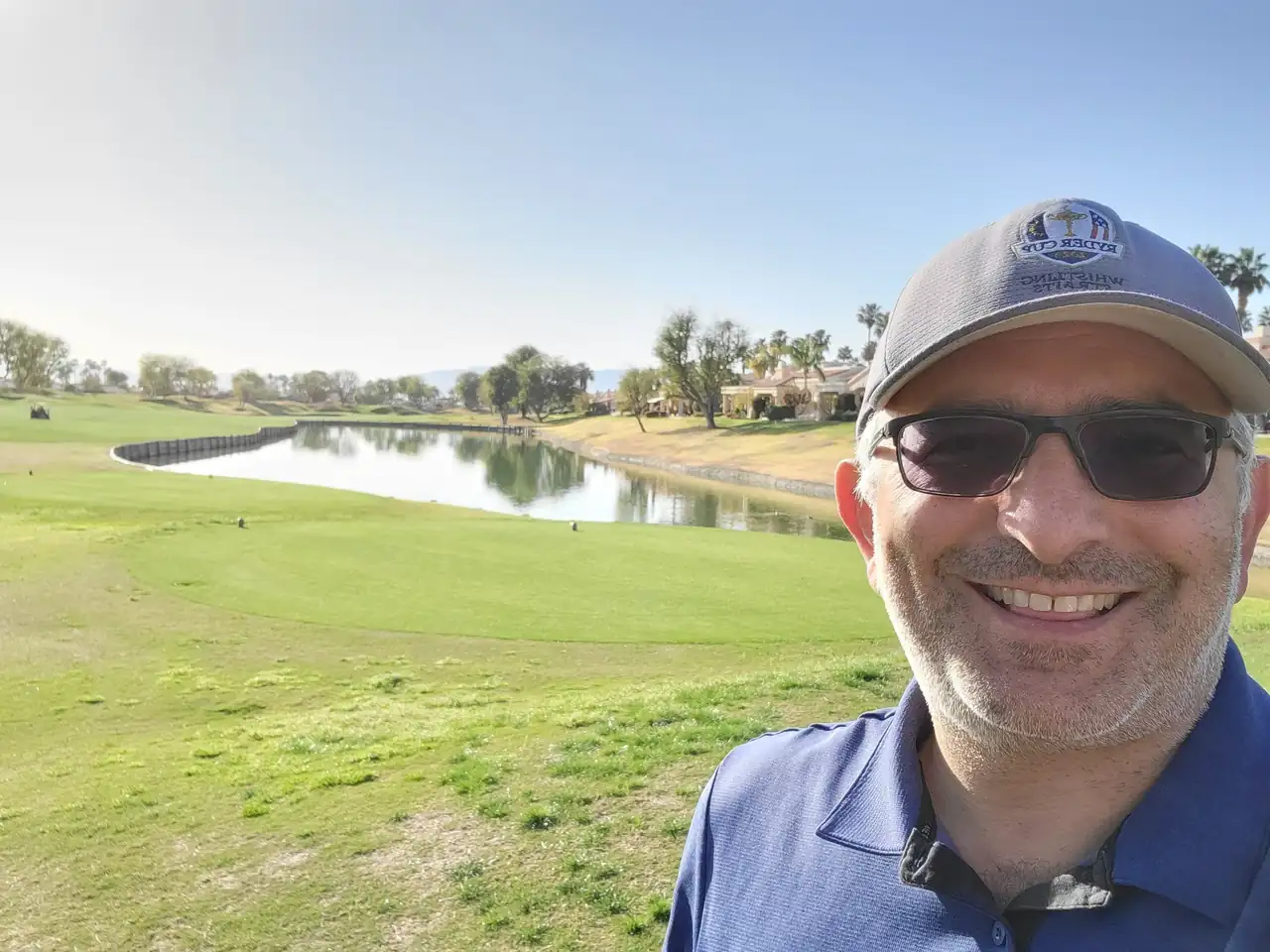
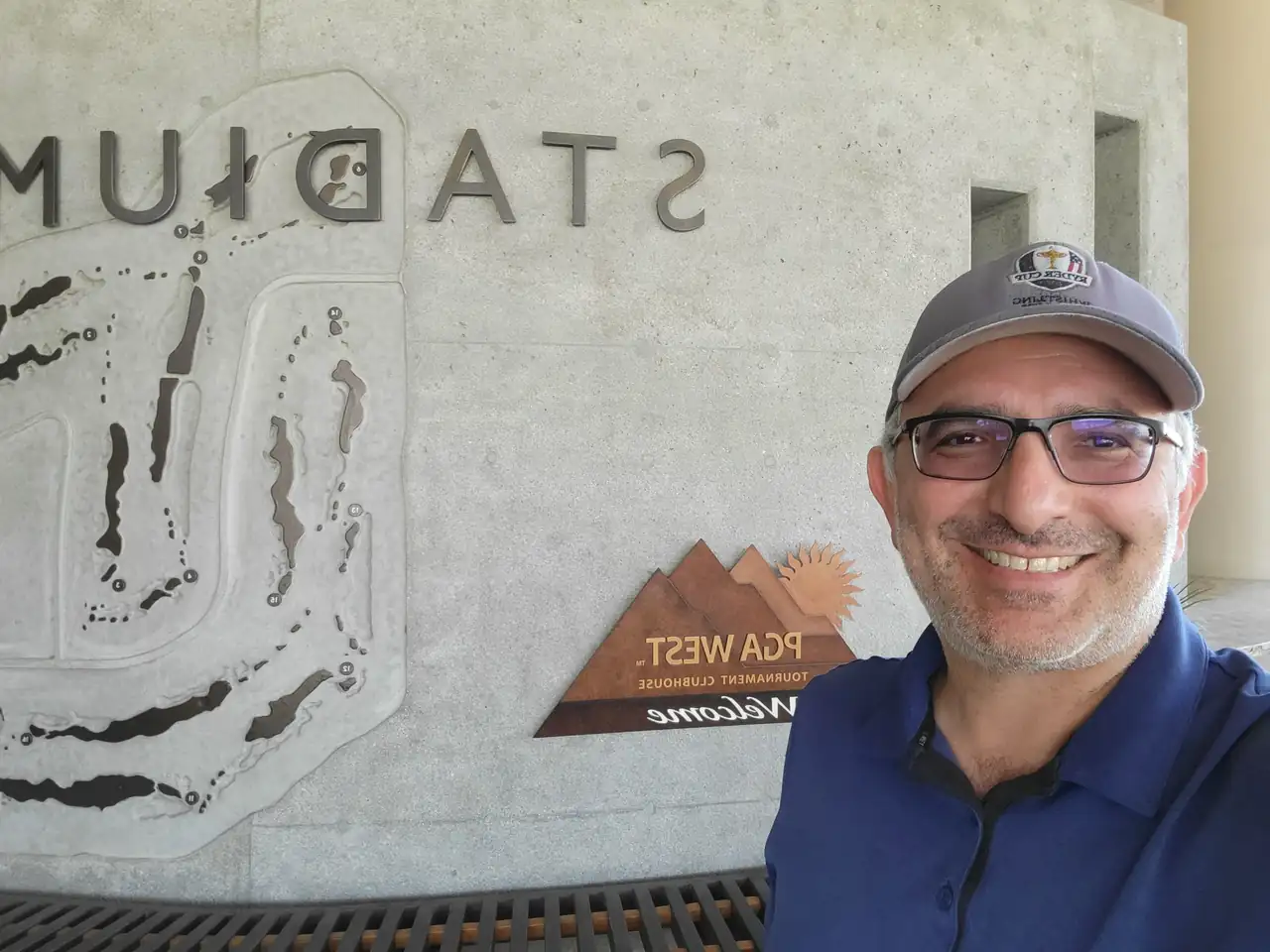
The Stadium Course at PGA West is a Pete Dye resort course in La Quinta, California, opened in 1986 and famous for its island-green 17th, "Alcatraz." It is the toughest of the PGA West courses by rating and slope and a host course of The American Express. The Perry Bros played it on March 21, 2021.
The Stadium Course was the first course at PGA West, the La Quinta development that Ernie Vossler and Joe Walser Jr. began in the 1980s. Their company, Landmark Land Co., had bought the La Quinta Resort in 1977 and opened Pete Dye's Mountain and Dunes courses next to it in 1980. The Stadium Course followed in 1986, and Dye's brief, as the PGA Tour tells the story, was to build "the hardest damn golf course in the world."
Dye started with flat, barren desert, a site The Fried Egg says he and his wife Alice counted among the worst they ever worked with. He moved huge amounts of earth to create tall mounding, near-vertical bunker faces and boulder-lined water hazards that echo the mountains in the distance, and he sculpted spectator seating into the terrain, which gave the course its name. Like his Stadium Course at TPC Sawgrass, built a few years earlier, it relies on awkward angles and visual deception, and it punishes the player who plays safe by leaving a harder next shot.
The course made its PGA Tour debut at the 1987 Bob Hope Classic. Corey Pavin won with a final-round 67, one shot ahead of Bernhard Langer, but the week belonged to the complaints. Raymond Floyd called the course "spiteful" and "belligerent," and players signed a petition to drop it from the rotation. The Tour stayed away until 2016, when the Stadium Course returned as a host of the event now called The American Express, played each January on the Stadium Course and the Nicklaus Tournament Course. In the meantime it hosted the made-for-TV Skins Game from 1986 to 1991, where Lee Trevino aced the island-green 17th to win a $175,000 carryover skin, and it has been a PGA Tour Q-School finals site several times.
In 2020 a joint venture of Century Golf Partners and Hankuk Industry bought the PGA West courses and funded a multiyear restoration of the three Dye courses led by Tim Liddy, who worked with Dye for nearly three decades. On the Stadium Course, crews stripped away decades of built-up organic material, reshaped bunkers, installed drainage and enlarged the greens by 20 to 30 percent, pushing them back out to the edges of the hazards. The greens were regrassed with TifEagle bermudagrass, and the Alcatraz green was restored to its original edges and lowered about five inches so the surrounding rocks stand taller. Today the course plays about 7,300 yards from the back and carries the highest rating (76.1) and slope (150) at PGA West.
Yes. PGA West lists the Stadium Course among its resort courses, and it can be booked as a resort tee time.
Pete Dye. It opened in 1986 as the first course at PGA West.
The par-3 17th on the Stadium Course, nicknamed "Alcatraz." Lee Trevino made a hole-in-one there during the Skins Game.
Sources: PGA West: Stadium Course · PGA West history · Wikipedia: PGA West · PGA West: Stadium restoration · PGA Tour: the 1987 controversy · GOLF.com: Stadium Course restoration · The Fried Egg: Stadium Course